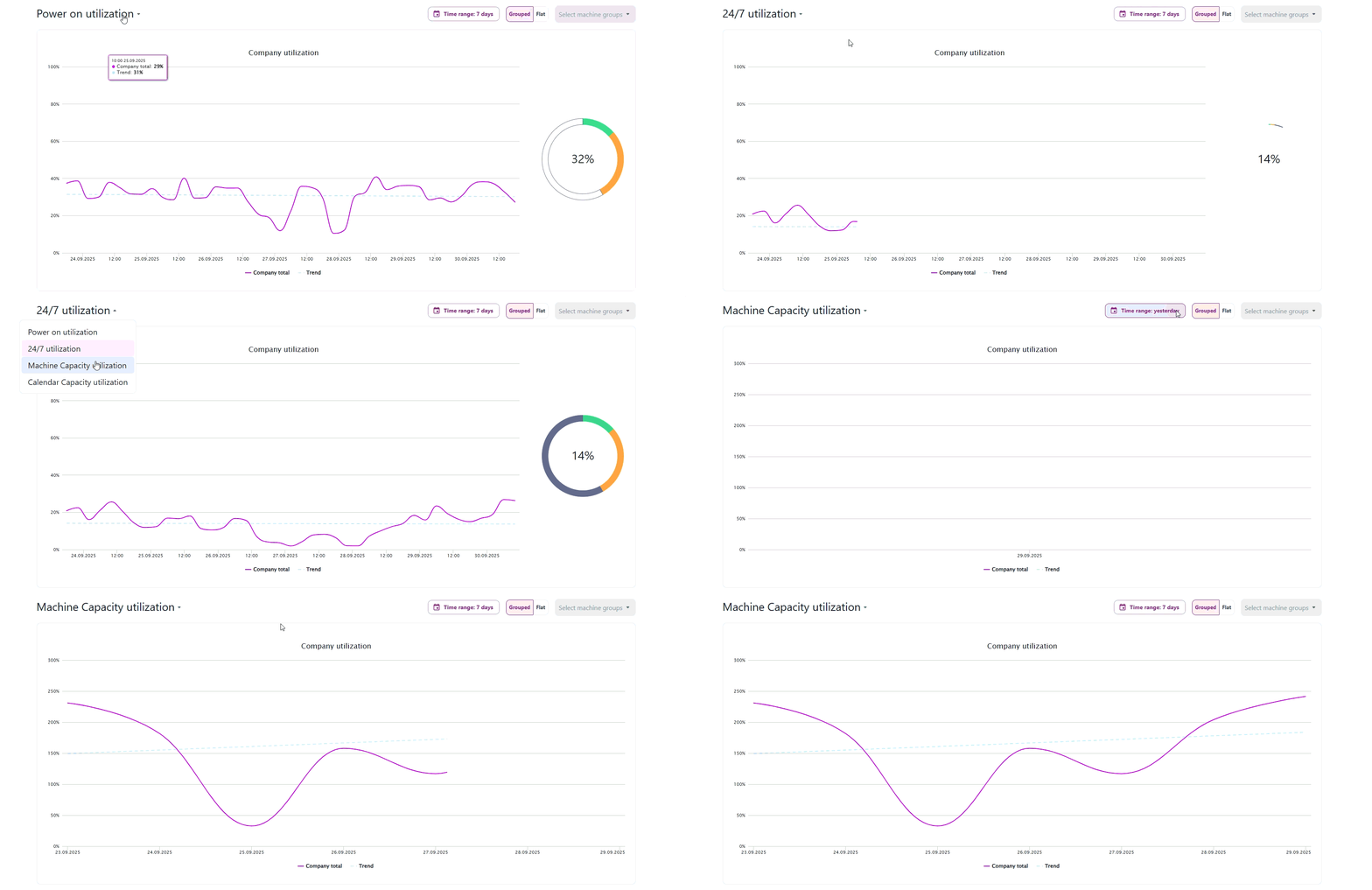
Time Range Picker Updates
Fresh improvements landed across Pulse and related apps. The time range picker is now consistent everywhere.
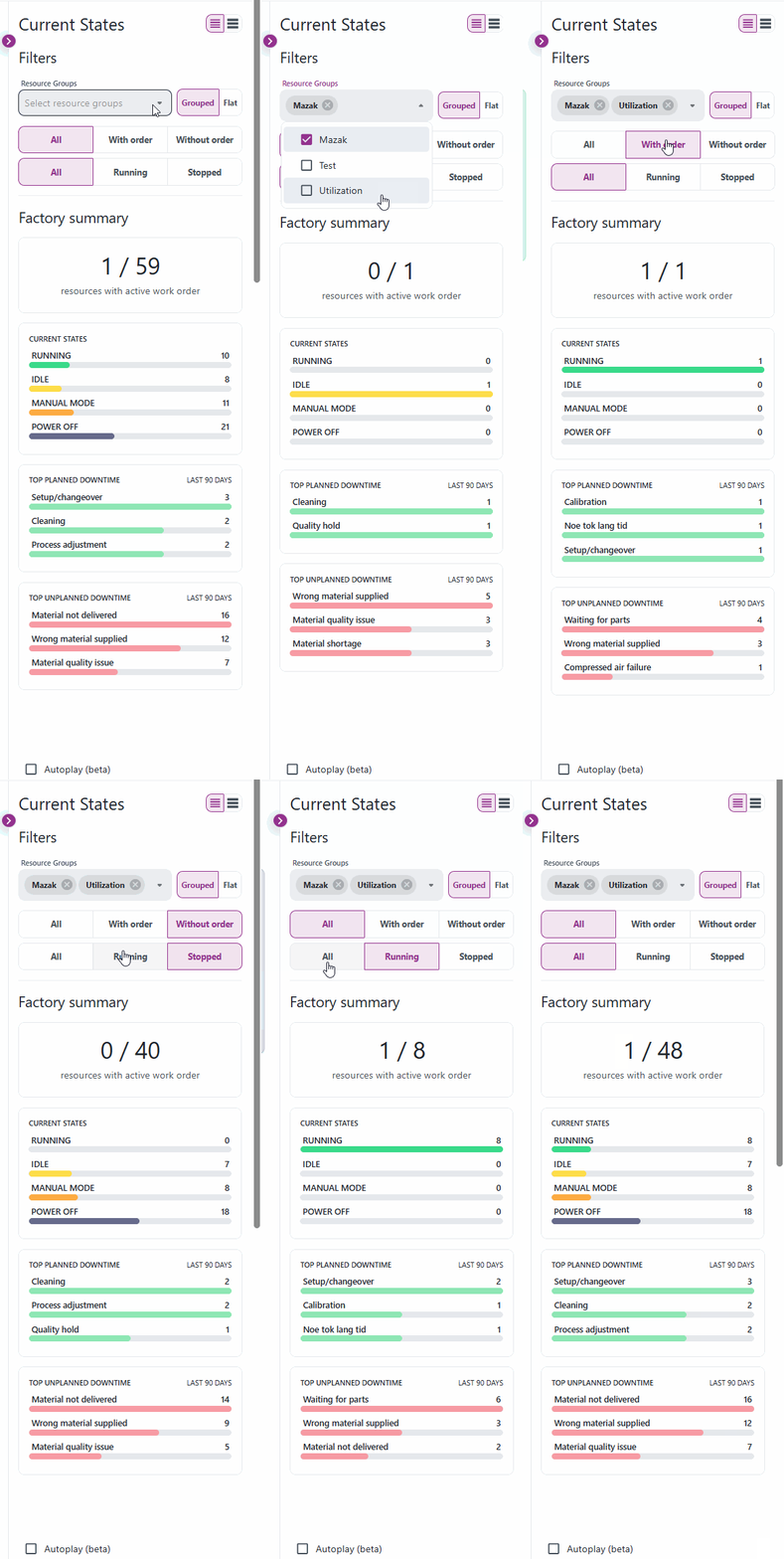
We have released an update to the Pulse app's Current States and Machine Timelines page summary, making it more insightful and relevant to your daily operations!
Top Downtime Reasons Visualization
Factory Summary Now Follows Filters
These changes make it easier to focus on the most relevant data and quickly identify trends or issues in your production environment.
Demo:

We have made it even easier to report and notice active Downtime Reasons in Machine States!
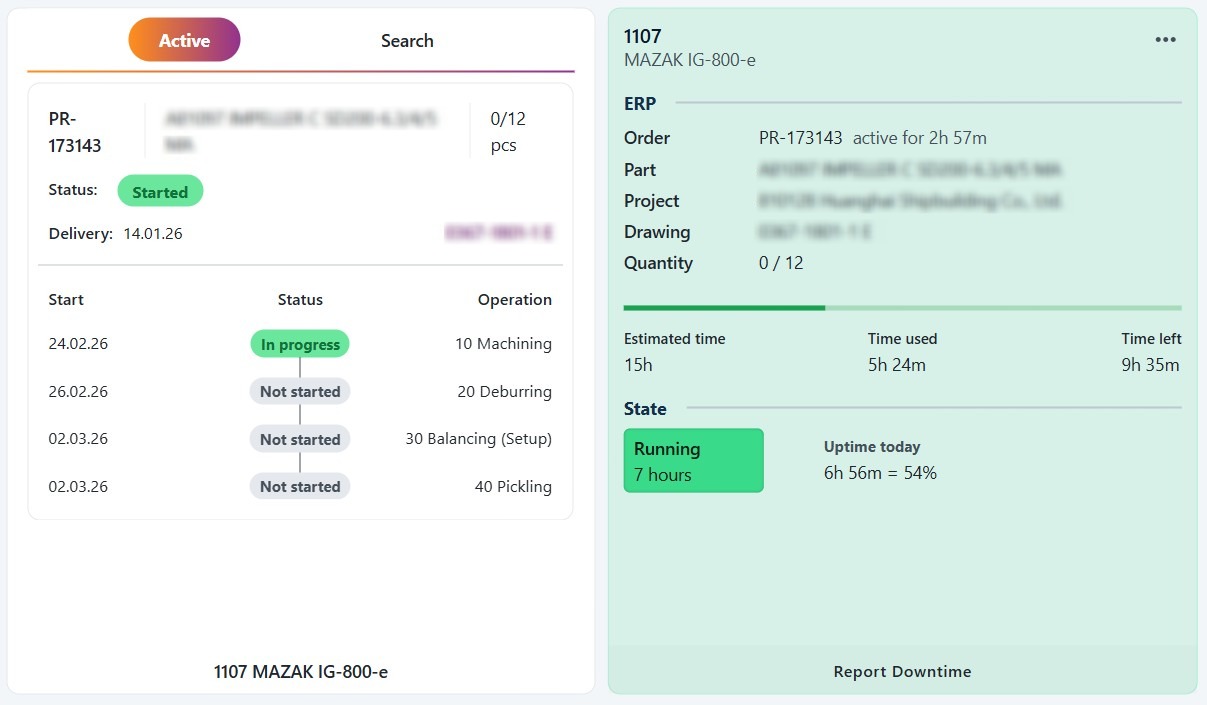
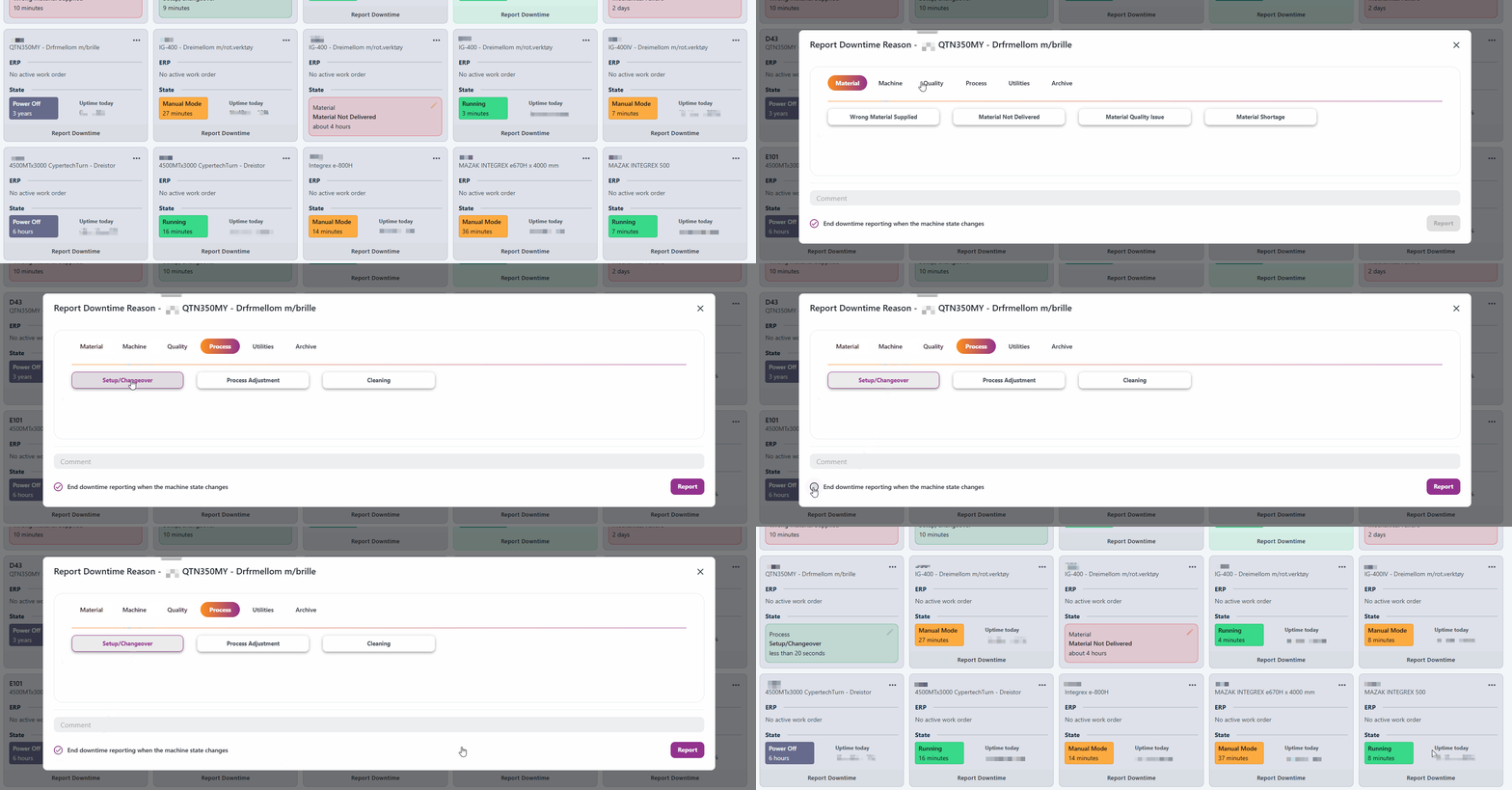
The resource card on the Machine States overview now has a dedicated Report Downtime button at the bottom. This makes it possible to report downtime for all resources. By clicking this button, you can start reporting downtime reasons just like in our report downtime widget in Workspace.

Here is a demo:

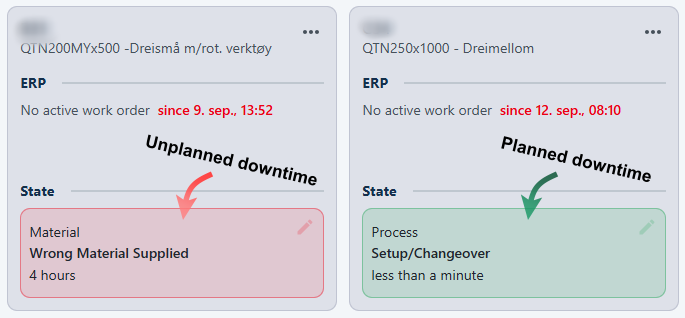
Resources that have active downtime reports will display a marker.

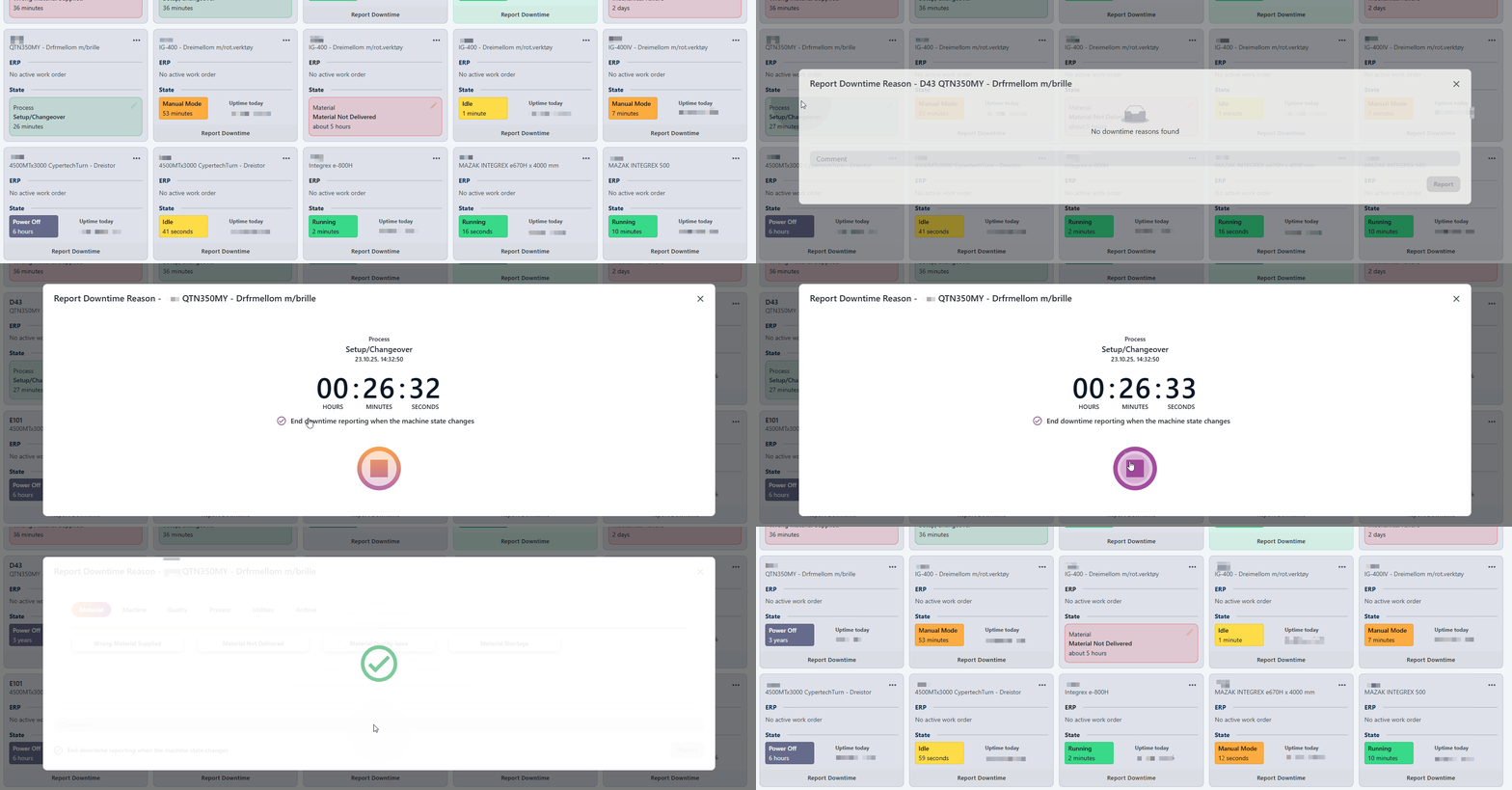
You can easily end or edit active downtime reporting by clicking the downtime report marker and pressing the stop button or checking/unchecking the "End downtime reporting when the machine state changes" option.

We’ve expanded Pulse with two new utilization methods:
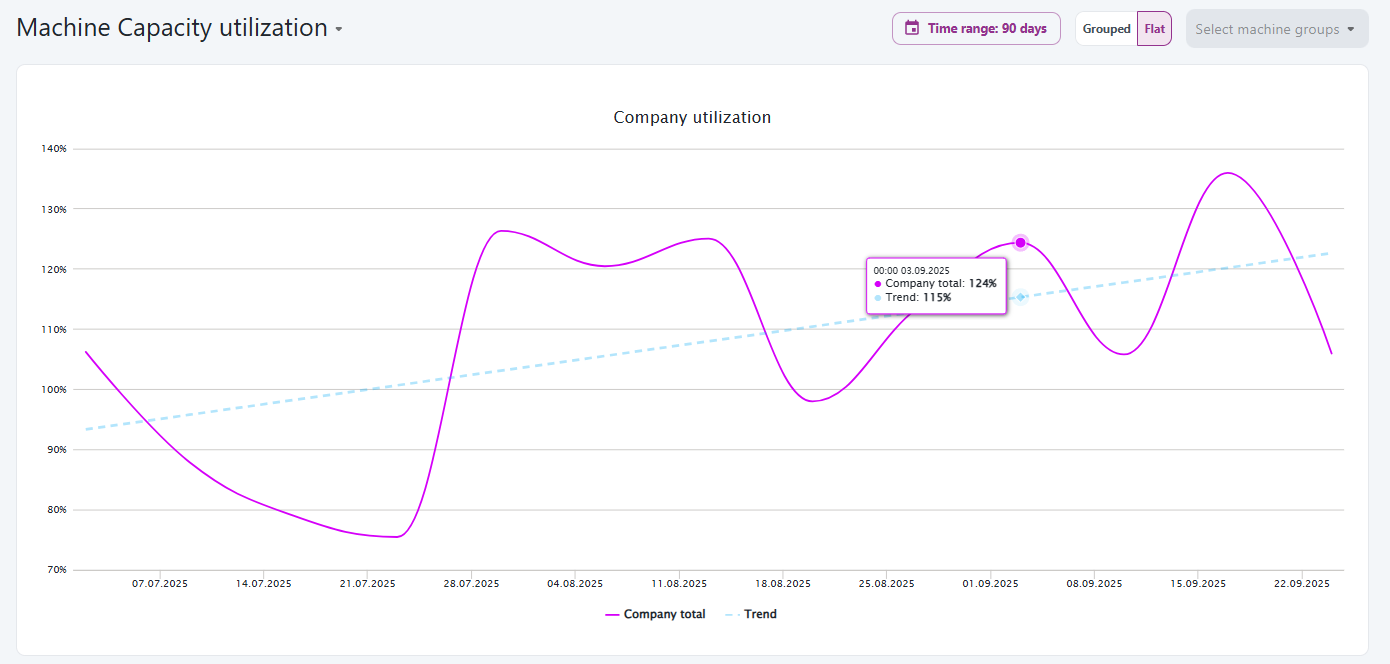
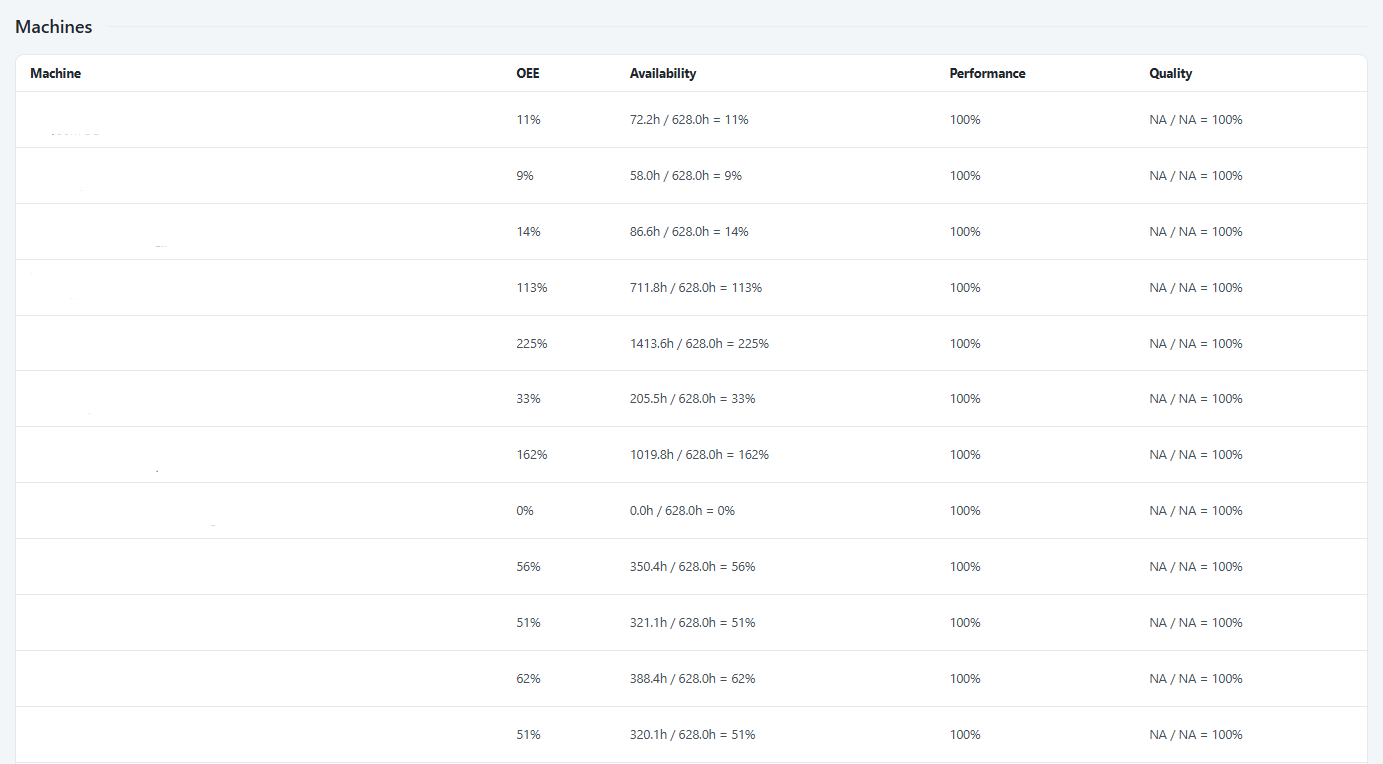
Machine Capacity utilization calculates how effectively a machine is used compared to its planned daily capacity.
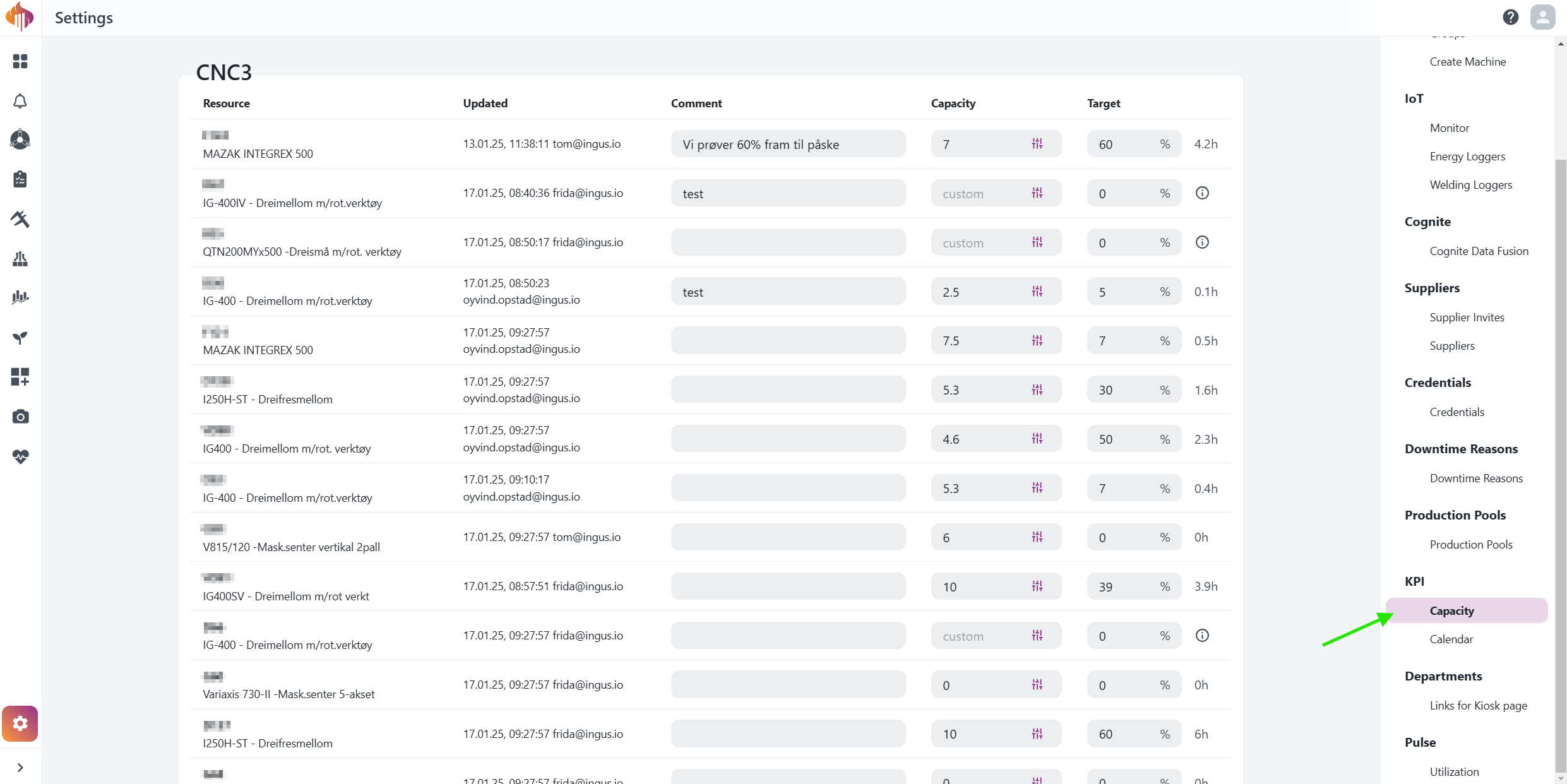
Admins can dynamically configure the daily capacity for each machine.
For example:
If a machine has its Monday capacity set to 8 hours, and its uptime is 4 hours, the utilization will be 50%.
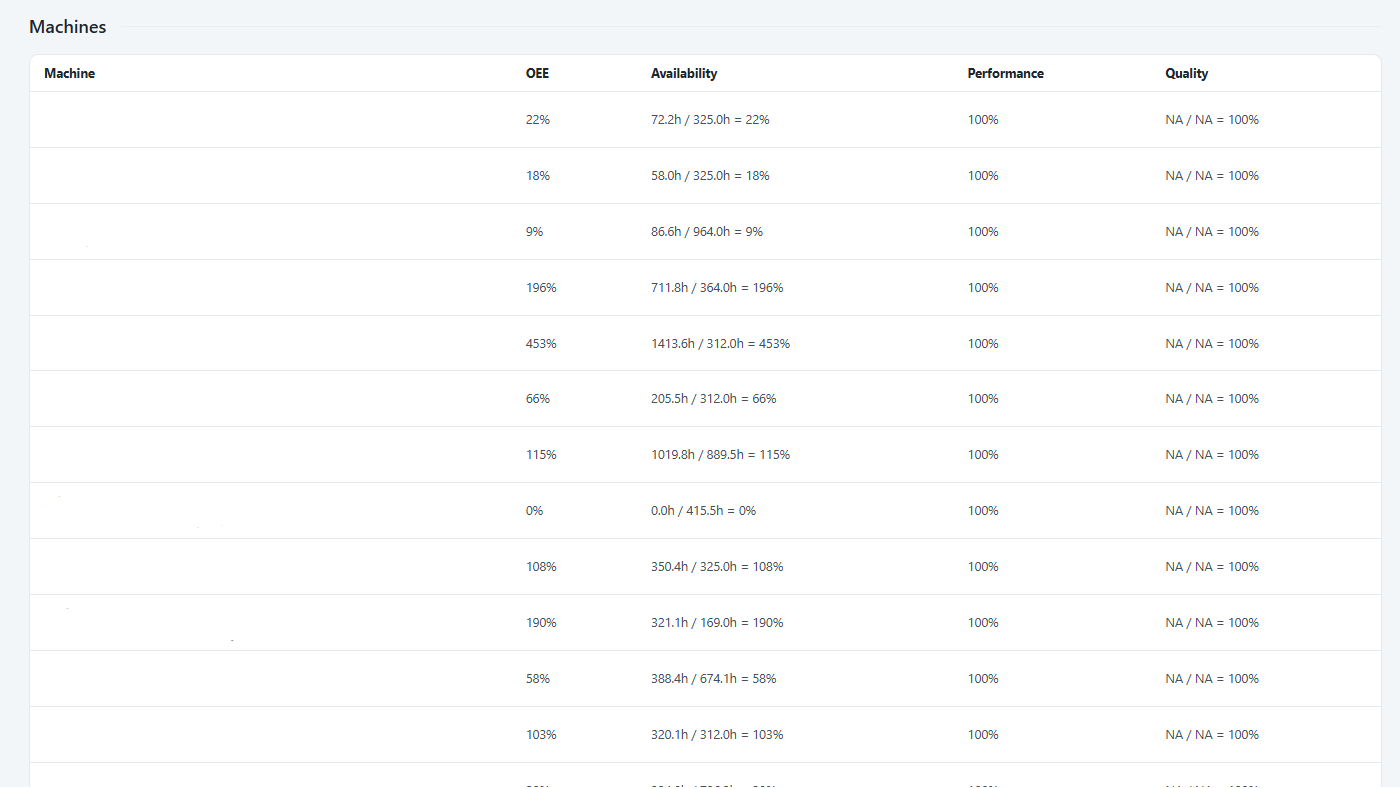
In systems where Performance and Quality values are available, the OEE calculation will include them. When these values are not provided, they are automatically set to 100%, meaning OEE effectively reflects Availability.
💡 Admin Tip:
Be careful when assigning very low capacity values (for example, 0.1 h) to weekends or non-production days. If the machine runs even briefly on those days, utilization can spike to unrealistic levels (thousands of %). Set capacity to 0 h for days with no planned production to avoid distorted results.
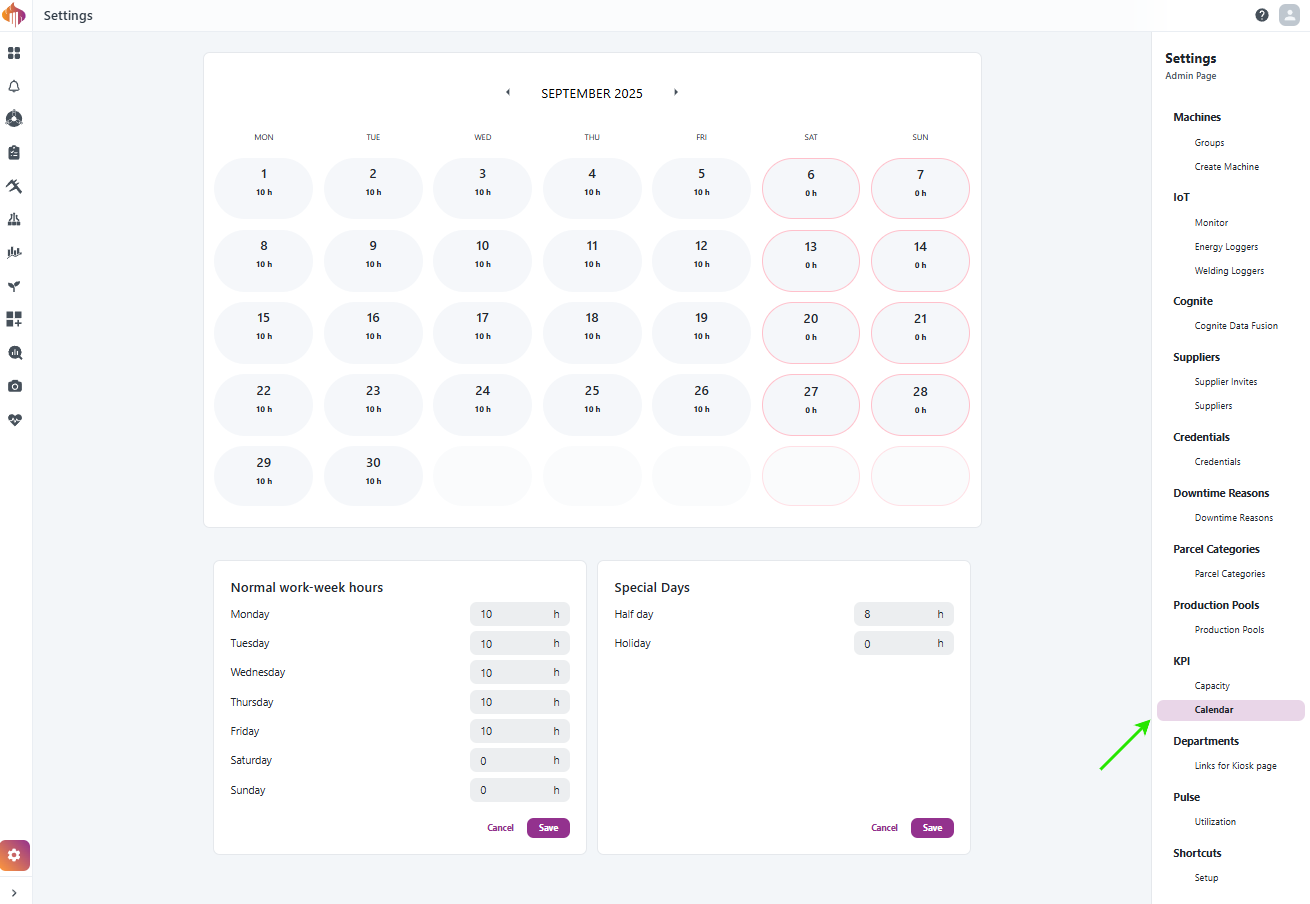
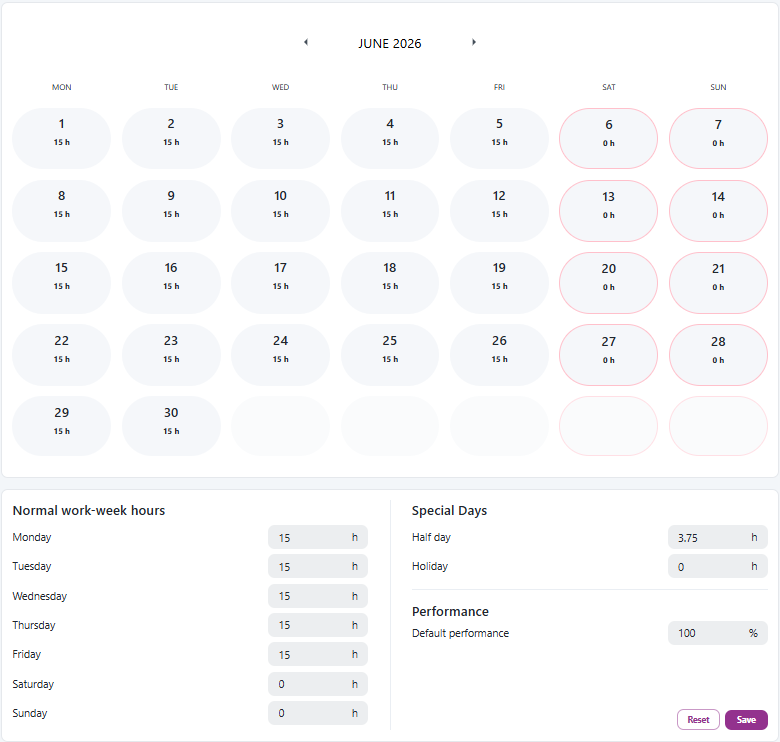
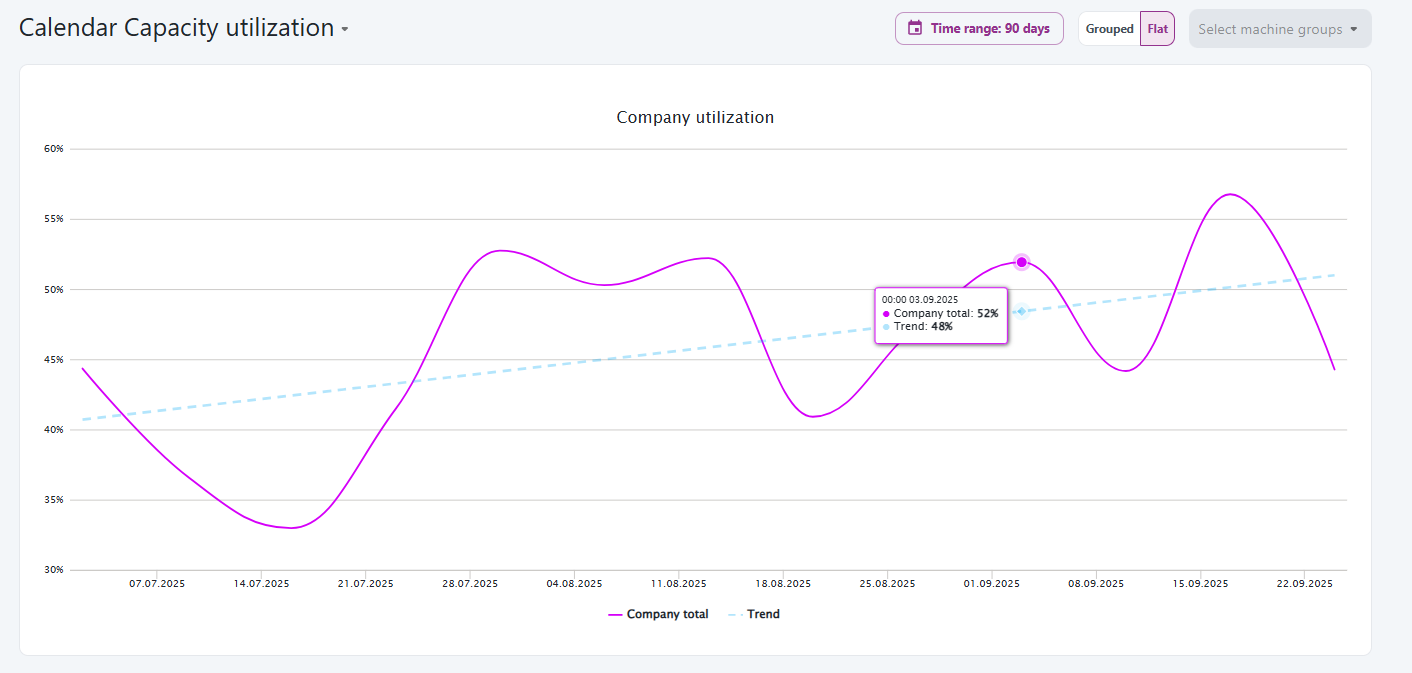
Calendar Capacity utilization calculates how effectively a machine is used compared to the company’s planned calendar capacity.
Admins can dynamically configure the calendar capacity.
Just like with OEE, in systems where Performance and Quality values are available, the OOE calculation will include them. When these values are not provided, they are automatically set to 100%, meaning OEE effectively reflects Availability.


We’ve improved the readability of utilization graphs by introducing a soft maximum of 100% on the Y-axis.

The Y-axis stays consistently locked at 100% until utilization values go beyond 100%, at which point the axis automatically adjusts.
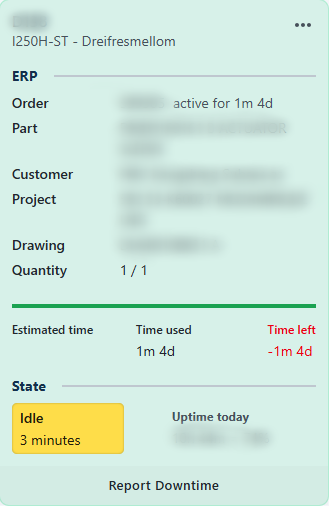
Pulse cards now make it easier to see how long a resource has been idle without an active work order.
Pulse card with inactive duration:
Tooltip showing exact inactive time:
We’ve made it easier to analyze and compare utilization data with the addition of a total row in utilization tables.

We’ve made it even easier for our Pulse users to organize their downtime reasons! The downtime topic admin page now supports sorting, so you can quickly arrange parent topics and their nested downtime reasons in the order that best fits your workflow.
Drag and drop the topics in prefered order in admin page:

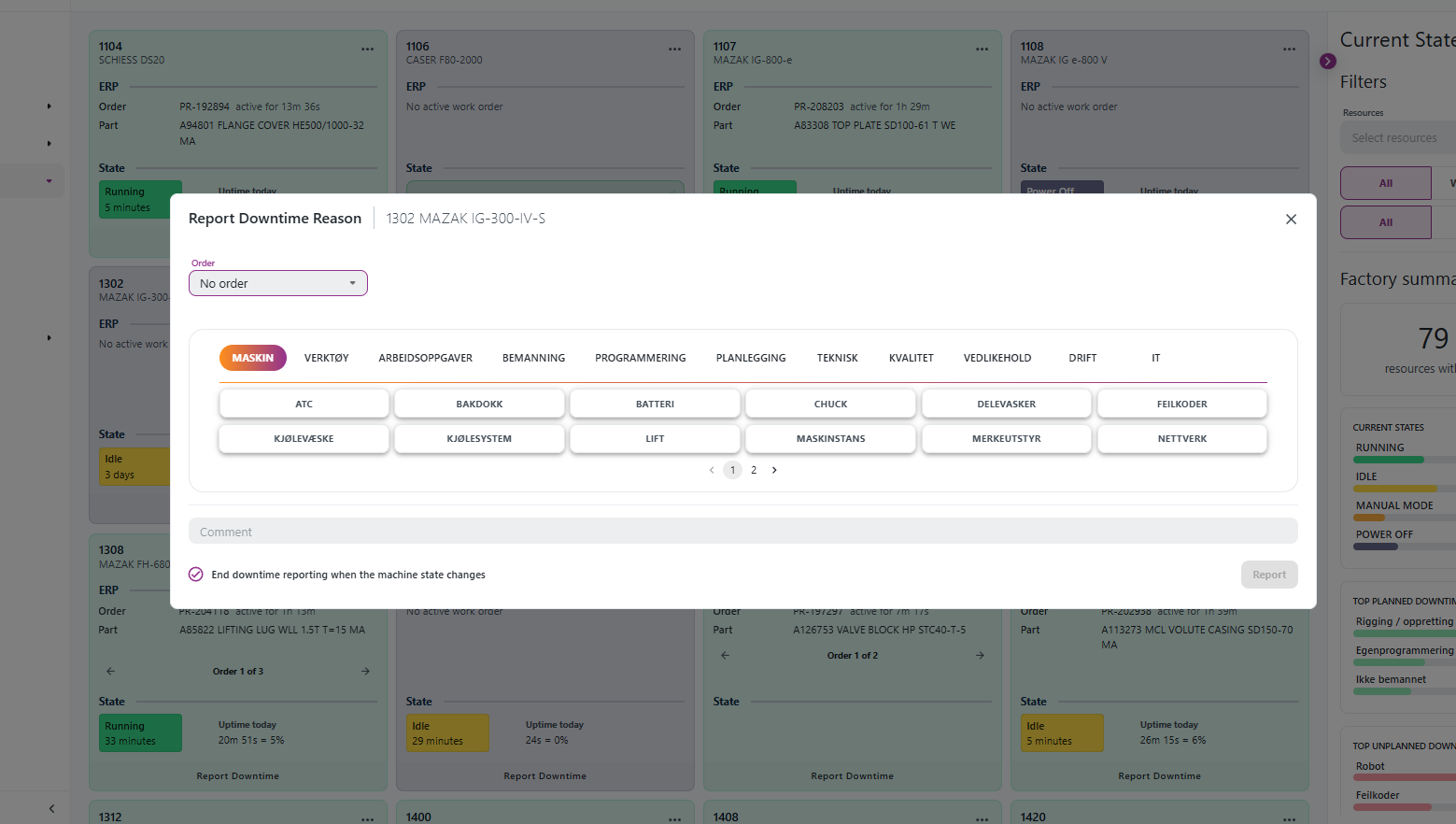
Results in report downtime reason interface:

We’ve made it easier to organize and manage downtime reasons in Pulse! Previously, downtime reasons could be linked to specific machine types. With our latest update, you can now create parent topics and nest downtime reasons under them, linking these topics to machine groups instead of types.

Key improvements:
Downtime reasons are now organized under parent topics, making it easier to navigate and select the right reason. Topics are linked to machine groups, providing more flexibility and better alignment with your operational structure. The admin setup page has been updated to support this new structure, allowing you to create and manage nested topics and group links. In the UI, downtime reasons are now displayed under tabs for each parent topic, making selection faster and more intuitive.

We’re excited to introduce a major upgrade to the Machine States timeline feature in Pulse! The familiar timeline is now called the Resource Activity Timeline, providing a more comprehensive and flexible view of your resource’s operations.

| Timeline Type | Description |
|---|---|
| Machine State | This line shows the status of your machine over time. |
| Work Order | A new line displays active work orders, making it easy to track production alongside machine states or alone. |
| Machine Program | Another new line shows which machine program is running, giving you deeper insight into operations. |
You can also report downtime reasons directly by clicking on the Work Order timeline.
Dynamic Timeline Lines: The timeline will automatically display only the relevant lines for each resource. If a machine doesn’t have state or program data, those timelines are filtered out, so you always see the most useful information for your context.